Friday, September 10, 2010

Bloglines - 7 Steps To Eliminating Joint Pain

Bloglines user ajw1981@live.com has sent this item to you, with the following personal message:

Words to the wise.


Zen to Fitness

7 Steps To Eliminating Joint Pain

By Chris on Vitamin D

11,750 Foot Yoga Moment
a4gpa

Young or old we all experience joint pain at sometimes in our lives. Be it from too exercise that is too strenous, an awkward move or simply the degeneration of our joints with age. Fortunatly there are several things we can so to reduce this pain and even eliminate it.

Joint pain is usually a result of a slight level of inflammation, a low grade inflammation around the body which can cause joints to ache. Inflamattion has many potential causes:

  • Over Exercising
  • Dietery triggers
  • Age
  • General Stress

And of course joint pain could also be result of Osteoarthiritis which is common in those above 65. Either way the tips I am about to mention can help you, they are also general guidelines that can help improve your health in general.

1- Exercise Consistently. Some sort of weight bearing exercise should be implemented as well as a low grade general form of exercise such as; Biking, Walking, Gardening, Hiking etc. Weight bearing exercise can strengthen bones through and increased production of Osteoblasts (bone builders).

2- Limit Wheat Consumption. Now I am not one to demonize wheat or tell you to stop eating it, but there is a good amount of research to show that in high enough doses wheat can cause joint inflammation and potentially lead to joint issues.

So what is your best bet? Go for the least refined product you can, and ideally something that has been prepared in a traditional way (which reduces the anti-nutrients) think sourdough or sprouted bread. Secondly slightly limit consumption – I feel the real problem with wheat comes not from eating it every now and then, but rather when it becomes a staple being consumed several times a day. There are an abundance of other non inflammatory sources of starch to be had like Corn, Roots, Brown Rice, and Quinoa…. Besides variety in diet is key.

3- Stretch/Mobility. As I haven mentioned in several previous articles stretching and mobility work is hugely important to maintaining and developing joint health. This is because it releases tightness in the muscles surrounding the joints, not only this but it allows more freedom in blood flow to the joints and therefore allows them to maintain their elasticity and mobility.

I had a friend who solved years of lower back pain just by implementing a regular and thorough stretching routine, focusing on the hamstrings. With times this seems to somehow strengthen the muscles and increase blood flow healing up the long standing injury. To me this is one of the reasons Yoga can work wonders on sports injuries.

4- Stress Reduction. General stress can also be a huge factor when it comes to inflammation - This doesn't just mean a stressful job, but it could be relationships, money problems, over exercising, not enough sleep, or just dealing with small stressors badly. Being chronically stressed to some level will increase the cortisol levels in your body and cause a chronic low grade level of inflammation. On top of causing joint pain this can also lead to several other health problems.

The solution is quite simply to find the main stressors in your life and do your best to deal with them. While this is not always easy it is one of the first areas to address when attempting to lead a healthy lifestyle.

5- Get your Vitamin D. A low intake of Vitamin D has been shown to lead to osteoarthiritis – Vitamin D is critical to calcium absorption in the body and most of the worlds population are at chronically low levels. I did a post a few months ago on ways to tan without blocking Vitamin D absorption. The best way to get Vitamin D is from sunlight, so supplements maybe worthwhile in the winter to keep levels topped up. So take every chance you have to get some sun…..

6- Keep Omega 6 intake Down. A high intake of Omega-6 fatty acids will increase blood concentrations of Interluekin-6 which is basically has a pretty substantial inflammatory effect on the body. It also seems to have a profound effect on down regulating the thyroid function. In a nut shell:

Avoid Vegetable Oils when possible (corn, soybean, canola, rapeseed) and. Use animal fat, butter, olive oil, and coconut oil instead, and eat plenty of fatty fish or take fish oil on occassion to balance out with Omega-3′s.

This stuff is nearly everywhere so make sure you read labels and make sure products are made with high quality oils/fats. This can be hard sometimes and its not something to get obsessed with but just a general guideline for better health.

7- Eat Spices. Specifically turmeric, which thanks to its curcumin has a potent anti-inflammatory effect on the body. What is interesting is that the specific anti-oxidants in turmeric seem to have a unique effect on arthritis of all forms.

It would be great to hear from readers who have suffered with some sort of joint problems and have overcome them. Tips and tricks from people who have actually lived it are invaluable.

Comments

Thursday, August 19, 2010

Judge Bans Gentically-Modified Beets

Judge Bans Gentically-Modified Beets

Hello, I saw this on Care2 and thought you'd like it as well. Care2 is the largest and most trusted information and action site for people who care to make a difference in their lives and the world.

Care2.com

sent you a link to content of interest

The Wastefulness of Decluttering; or How to Make Less Count for More
http://zenhabits.net/simple-wasteless/

The sender also included this note:

This man is so smart

--
Sent via a FeedFlare link from a FeedBurner feed.
http://www.google.com/support/feedburner/bin/answer.py?answer=78966&topic=13246

Thursday, August 12, 2010

sent you a link to content of interest

sent you a link to the following content:

The importance of enjoying the habit
http://zenhabits.net/enjoy-the-habit/

The sender also included this note:

Always intelligent advice

--
Sent via a FeedFlare link from a FeedBurner feed.
http://www.google.com/support/feedburner/bin/answer.py?answer=78966&topic=13246

Saturday, August 07, 2010

Bloglines - How to Use Fiber to Improve Your Health

Bloglines user has sent this item to you, with the following personal message:

More things to keep in mind


Zen to Fitness

How to Use Fiber to Improve Your Health

By Chris on Fitness

artichoke
-sel

We hear so much about fiber and its effects on our general health, digestion and keeping our bowels healthy. What we don't hear too much about are the ways that fiber can improve our health in other aspects like reducing fat gain and regulating appetite. To me this is a hugely interesting topic as there seem to be certain types of fiber that can accelerate fat loss, stop fat gain and even lowering our body weight set point while improving our satiety when eating.

Fiber is pretty much indigestible starch, it is a form of carbohydrate that our bodies cannot break down. Therefore it passes through our digestive tract without being absorbed by the body and used as energy. Foods rich in fiber are things like:

  • Pulses and Legumes
  • Unprocessed Grains
  • Fruit and Vegetables

And the things with little or no fiber are meat and fat based products. This post is not another call to eat high fiber foods to gain the conventional benefits that I am sure you have all read about before, but rather to show some of the different ways you can use the unique sources of fiber that nature provides for sustainable health benefits……

So how can we use fiber to our benefit and which types of fiber should we be aiming to eat on a regular basis to gain these benefits?

Resistant Starch - This is the first thing that I came across when reading about this topic and by far the most interesting. Resistant starch is basically another soluble fiber, but the interesting thing is that their are 4 levels of this type of fiber and each one provides a different benefit.

The most interesting of the bunch is what is called Resistant Starch Type 3 which was coined to describe starchy foods which need to be cooked to be edible to humans (legumes, grains, potatoes etc..) the secret to this type of resistant starch is the benefit when cooled down as the properties change and the benefits are amplified. The unique undigestible element in these foods has been shown in numerous studies to:

These are some pretty astounding beenfits from simply eating whole unprocessed carbohydrates and goes to show why ancient cultures thrived eating these foods regularly. It even leads towards why one of the leading causes of bad health and obesity around the world is probably due to the rising consumption of processed grains and other carbohydrates that have been stripped of their fiber and nutrients – Therefore stripping people of the benefits mentioned above, which could go a long way to improving health and stopping excess weight gain.

Oligo-Fructose - This weird sounding fiber is a slightly different animal to resistant starch in that it is found in other foods and works slightly differently all be it to give simular benefits. Oligo-Fructose os cointed as a "pre-biotic" which Unlike "pro-biotics", 'live' bacteria products which add healthy flora to the gut, prebiotics don't replace bacteria but help feed up the 'good' bacteria in the digestive tract.

These to improve the guts general health. It has been shown that regular consumption of oligofructose whether from supplementation or diet works towards fat loss without any other changes in diet. It seems to work by improving out guts health which also leads to better glucose tolerance and satiety when eating. These will leads to a natural desire to eat less food.

Pectin - Apple pectin is the best source and one of the main reasons I recommend an apple a day. Pectin is a sort of soluble fiber which works in simular way to the two fibers mentioned above, it is the reason apple's make for such a satisfying snack and can provide fullness and satiety for hours. Apple pectin is contained in the skin of the apple (so no peeling) and works to create a gel like substance in our guts which is not only soothing to the gut lining but provides benefits again in blood glucose management.

Using this knowledge to our benefit….

So the big question is how exactly can we best apply this theory to practice? Well thankfully the answer is pretty simple, in that we should get the vast majority of our carbohydrates from unprocessed, unrefined foods which will supply resistant starch and pre-biotics in abundance. Another option is to buy some oligofructose powder which is pretty cheap and actually tastes pretty nice and sweet. This can be sprinkled on foods or into things like soup to get the benefits (don't use too much though as it has the tendency to cause gas when used in excess)

Apart from supplements the foods you should focus on are the following:

  • Potatoes
  • Beans and Lentils
  • Bananas which are not overly ripened (more resistant starch)
  • Apples
  • Artichokes
  • Chicory root
  • Onions
  • Leeks
  • Jicama

These foods contain resistant starch, oligofructose and pectin. To get the most benefits of resistant starch try to eat a few meals a week which consist of root vegetables or legumes which have been cooled to room temperature. Cooking things like potato salad or lentil salads, this allows the starch to reach its most effective stage and provide the most benefits compared to when these foods are hot.

There you have it, another piece of nutrition knowledge to use in your quest to improved health and vitality…….

If you enjoyed this article, please checkout my book A Simple Guide to Eating Well and you also can follow me on Twitter.

Post to Twitter

Comments

Bloglines - Simplify Your Health & Fitness Habits

Bloglines user has sent this item to you, with the following personal message:

Words to the wise


Zen to Fitness

Simplify Your Health & Fitness Habits

By Chris on Simplicity

[add wish here]
piermario

This is a guest post by Chris Stroud. You can read more from Chris at Live Simply and find him on twitter @livesimplyblog

I am in love with the idea and practice of living a simpler life. It allows me to avoid much of the superfluous distractions that surrounds me and allows me to focus more on the things in life that are most important to me; Health and Fitness being towards the top of that list.

In my last 10 years of Strength and Conditioning I have done Bodybuilding, got a degree in Kinesiology, currently compete in Crossfit and Olympic Lifting, and over the last 3 years have maintained 7-8 percent bodyfat. The most important thing I have learned from these experiences is that simpler is almost always better.

Instead of adding complexity to the way you manage your Heath and Fitness here are 5 ways to make it simpler.

1 – Think Long Term. The underlying purpose of why we train is so that we can maintain able bodies and minds for as long as possible. The sports we play, exercise methods we us, and dietary advice we adhere to are habits we form so that can live longer and be happy. When deciding how to eat and how to train take into consideration the long term feasibility, economics, and benefits by doing your due diligence by researching before partaking. This will make things simpler by being able to sift through the plethora of bull shit that is all to prevalent in the Health and Fitness industry.

2 – What you put in your pie hole. You know exactly what you should be eating. Food that is as close to its most natural state as possible. Meat, Vegetables, Fruits, Nuts, and Seeds. If you can dig it from the ground, pick it from a tree, or kill it with a stick then its likely a healthy choice. it gets increasingly complex with you start introducing supplements and processed food to your diet while attempting to maintain a certain level of well-being. Focus on developing habits and a lifestyle that makes it easy to eat natural foods. Only keep natural foods in the house, go to farmers markets, and only drink water, black coffee, and tea.

3 – Maintain your Strength. Remember, we train so keep able mind and bodies as long as possible. A very important tool we have for accomplishing that is to develop and preserve as much strength for as long as we can. There is a myriad of different protocols to build strength and a good program will at the very least have a good portion of these core exercises.

  • Weightlifting: Squats, pressing, and deadifts.
  • Gymnastics: Pull ups, Push ups, and maybe air squats.
  • Endurance: Swim, Bike, Run, or Row.

This is a overly simplistic way to evaluate a exercise program, even for this article, but that's the point I'm advocating. Simplicity! A simple routine is more manageable in the long term than perpetually compounding it with complexity. You should aim to be able to do this activities for your entire life.

4 – Remove temptations from the Kitchen. Here are a few rules I follow that help me stay paleo.

  • Only keep Paleo food in the house.
  • When I want a treat i'll go out, eat it, but wont bring it home.
  • Always keep cooked meat or marinated meat in the fridge. I find that having protein around and easy to get to keeps me eating clean.
  • Go to the farmers market once a week and get what ever is in season.

5 – Enjoy it. You are lucky to be a healthy, athletic, vigorous person. Your health is one of the great joys of being alive. Do fun things like taking adult gymnastic classes, dance lessons, hiking, swimming, rock climbing, paddling, and just learning new sports and skills in general.

Thanks to Chris for writing this post, I love his blog redesign and the new content is amazing! I just got back from Holiday and have some cool stuff to blog about, so keep checking back….

Post to Twitter

Comments

Wednesday, August 04, 2010

7 Simple Ways To Say "No"
http://zenhabits.net/say-no/

The sender also included this note:

As always, words to the wise

--
Sent via a FeedFlare link from a FeedBurner feed.
http://www.google.com/support/feedburner/bin/answer.py?answer=78966&topic=13246

Springfield Closed Back

Springfield Closed Back
Cant decide. I have a high instep so open back clogs usually fit me better, but the dress code at work for me requires closed back shoes. I am reluctant to invest in something like Dansko clogs, much more expensive, since Mary Lou told me that hers were really too tight across the instep, and she wears the same size I do. What to do.

Sunday, August 01, 2010

So what approach to take?

My Dh, who has always been somewhat difficult, is truly becoming impossible to live with since his medical problem jus a week ago. He seems to feel that he has lost control of his life and is trying to remedy that by attempting to control every little thing that goes on around him.
That translates to trying to control me, everything I do or say, even super control of the already very obedient dogs.
For instance, when I got home last night, I gathered up my stuff and went to the back of the car to get the cat food and stuff I had bought. The neighbor was there, and Dh was there, so I figured they could carry the stuff down the hill. Dh slammed the car hatch and very harshly said he would get the stuff later. Of course, in the course of the evening he went up the hill several times and never did get the stuff, so I eventually had to go get it myself in the dark.. That of course made him even madder. At me of course, not at himself for acting like an ass in the first place.
Then when I was trying to get ready for bed, since I had to get up at 4 AM, I asked him if I could turn off the light in the hall and in his bathroom so I could go to sleep. Big mistake; he had to yell about how I wasnt going to control everything that goes on. He slammed around for at least another hour and kept all the lights on whether he was in the bathroom and hall or not, just to spite me I guess.
I had already taken my sleeping pill, so did eventually go to sleep. But it was only able to give me 2 solid hours before the leftover adrenalin fought its way back to the top and woke me up for the rest of the night. And I am now having to work a 12 hour shift on 2 hours sleep.
And then fight again when I get home I'm sure. Exhausts me even more just thinking about it. I dont know what to do.

Saturday, July 31, 2010

Another rattlesnake

Killed another rattlesnake last night, at dusk. That is the fifth one in 10 days. This one was crossing the open ground between the shed and one of the chicken yards. A bigger one than we have been seeing too. Scary. Sam heads for the house as soon as you say "SNAKE", but dumb Robin just doesn't get it. The only thing to do with her is scoop her up and keep her out of the way until it is killed.

Friday, July 30, 2010

Rattlesnakes everywhere

In the last week we have killed 4 rattlesnakes, 3 of them right around our shed and one in a chicken yard. The one killed (we hope) under the shed has been there for weeks, rattling away whenever there was any activity around the recycling barrels but staying back where he couldnt be reached with a shovel.. Dh finally got tired of it, and shot the .410 under there twice, silencing him the second time. Hopefully that is the end of the problem, although they probably hatched a whole nest of them under there and this will keep happening for years. Perish the thought!

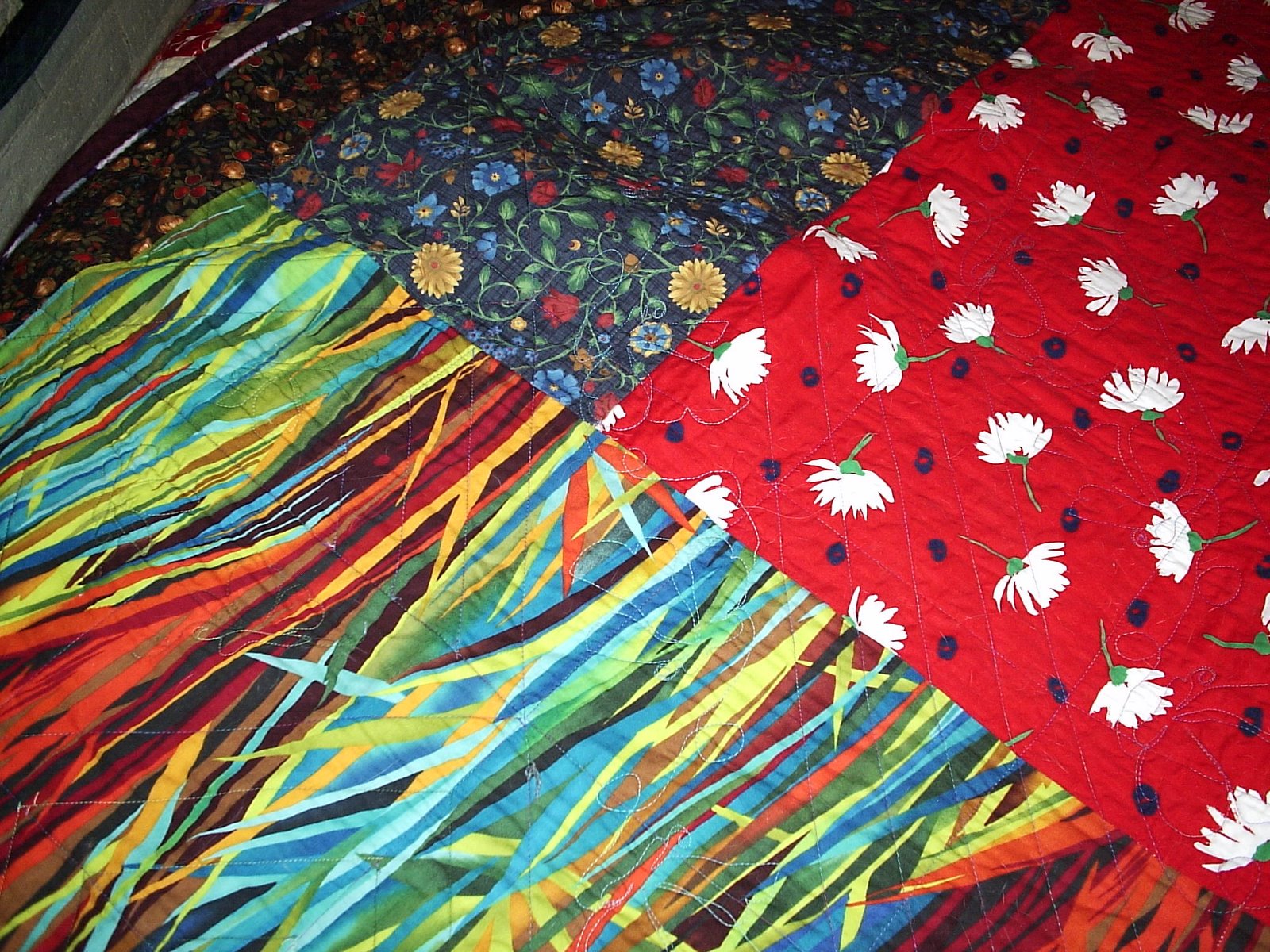
Layout of postage stamp

A terrible picture, but this is how far I am on the postage stamp quilt. I need to make 4 more blocks of 16 small blocks each. I am so burned out on this project.
Posted by Picasa

Monday, July 26, 2010

Bloglines - Test your knowledge of cosmetics safety: 8 myths debunked

Bloglines user has sent this item to you, with the following personal message:

more about cosmetics


Enviroblog
Environmental connections to public health

Test your knowledge of cosmetics safety: 8 myths debunked

By Lisa Frack

skindeepguide_inset.gifThe new Story of Cosmetics video explains why personal care products in the United States contain untested and downright dangerous ingredients.

The (very) good news is the U.S. House of Representatives just introduced a bill to fix all that. But in the meantime (until they pass it!), make sure you don't fall prey to these common myths:

1. Myth: If products are for sale at a supermarket, drugstore, or department store cosmetics counter, they must be safe.

Fact: The Food and Drug Administration (FDA) has no authority to require companies to assess ingredients or products for safety. FDA does not review or approve the vast majority of cosmetic products or ingredients before they go on the market. The agency conducts pre-market reviews only for certain color additives and active ingredients in cosmetics classified as over-the-counter drugs.

2. Myth: The cosmetics industry effectively polices itself, making sure all ingredients meet a strict standard of safety.

Fact: In its more than 30-year history, the industry's safety panel (the Cosmetic Ingredient Review, or CIR) has assessed fewer than 20 percent of cosmetics ingredients and found only a handful of ingredients or chemical groups to be unsafe. Its recommendations are not binding on companies.

3. Myth: The government prohibits dangerous chemicals in personal care products, and companies wouldn't risk using them.

Fact: Cosmetics companies may use any ingredient or raw material, except for color additives and a few prohibited substances (such as vinyl chloride and cow parts), without government review or approval.


  • More than 500 products sold in the U.S. contain ingredients banned in cosmetics in Japan, Canada or the European Union.

  • Nearly 100 products contain ingredients considered unsafe by the International Fragrance Association.

  • A wide range of nanomaterials whose safety is in question may be common in personal care products.

  • 22% of all personal care products may be contaminated with the cancer-causing impurity

  • 1,4-dioxane, including many children's products.

  • 60% of sunscreens contain the potential hormone disruptor oxybenzone that readily penetrates the skin and contaminates the bodies of 97% of Americans.

  • 61% of tested lipstick brands contain residues of lead.

4. Myth: Cosmetic ingredients are applied to the skin and rarely get into the body. When they do, levels are too low to matter.

Fact: People are exposed by breathing in sprays and powders, swallowing chemicals on the lips or hands or absorbing them through the skin. Studies find evidence of health risks. Biomonitoring studies have found cosmetics ingredients - like phthalate plasticizers, paraben preservatives, the pesticide triclosan, synthetic musks, and sunscreens - inside the bodily fluids of men, women, children and even the cord blood of newborn babies.

Many of these chemicals are potential hormone disruptors that may increase cancer risk. Products commonly contain penetration enhancers to drive ingredients deeper into the skin. Studies find health problems in people exposed to common fragrance and sunscreen ingredients, including elevated risk for sperm damage, feminization of the male reproductive system, and low birth weight in girls.

5. Myth: Products made for children or bearing claims like "hypoallergenic" are safer choices.

Fact: Most cosmetic marketing claims are unregulated, and companies are rarely if ever required to back them up, even for children's products. A company can use a claim like "hypoallergenic" or "natural" "to mean anything or nothing at all," and while "[m]ost of the terms have considerable market value in promoting cosmetic products to consumers, dermatologists say they have very little medical meaning."

An investigation of more than 1,700 children's body care products found that 81 percent of those marked "gentle" or "hypoallergenic" contained allergens or skin and eye irritants.

6. Myth: FDA would promptly recall any product that injures people.

Fact: FDA has no authority to require recalls of harmful cosmetics. Furthermore, manufacturers are not required to report cosmetics-related injuries to the agency. FDA relies on companies to report injuries voluntarily.

7. Myth: Consumers can read ingredient labels and avoid products with hazardous chemicals.

Fact: Federal law allows companies to leave many chemicals off labels, including nanomaterials, contaminants, and components of fragrance. Fragrance may include any of 3,163 different chemicals, none of which are required to be listed on labels. Fragrance tests reveal an average of 14 hidden compounds per formulation, including potential hormone disruptors and diethyl phthalate, a compound linked to sperm damage.

8. Myth: Cosmetics safety is a concern for women only.

Fact: Surveys show that on average, women use 12 products containing 168 ingredients every day, men use 6 products with 85 ingredients, 35 and children are exposed to an average of 61 ingredients daily. The large majority of these chemicals have not been assessed for safety by the industry-funded CIR safety panel.

References are available when you download the pdf here.


Bloglines - A personal response to the President's Cancer Panel Report

Bloglines userhas sent this item to you, with the following personal message:

Scary stuff


Enviroblog
Environmental connections to public health

A personal response to the President's Cancer Panel Report

By Lisa Frack

MyPicture - small for EB.jpgSpecial to Enviroblog by Heidi Hutner, Associate Professor of English and Women's Studies at SUNY Stony Brook.

The 2009 President's Cancer Panel report, "Reducing Environmental Cancer Risk, What We Can Do Now," confirms what Rachel Carson articulated in Silent Spring and what Sandra Steingraber argued in her book, Living Downstream.

Toxic chemicals in our bodies, in random combinations based on exposures starting before we're born, are "linked to genetic, immune and endocrine dysfunction that can lead to cancer and other diseases."

Translation: many toxics cause cancer. The authors of the latest President's Cancel Panel Annual Report cannot say this outright because of the way scientific studies work and because our country has not invested nearly enough money in studying the relationship of toxics to human health (cancer specifically). We don't yet have complete enough national databases and precise enough methods of measurement to draw definitive conclusions.

But the authors of the President's Cancer Panel report certainly come up with a clear case, and they offer many examples of how and where we exposed to dangerous toxics and what needs to be changed. We do know enough, they suggest, we've studied enough, to be able to say that the evidence all points to the fact that our bodies are full of toxic junk that can cause cancer and, often, premature death.

Women's bodies tend to have larger amounts of these toxins, and they are passed to their unborn children through the placenta and later through breast milk. Children are born with their bodies already full of toxics. Their umbilical cord blood tells us this. Their little bodies are at special risk because of their smaller body mass and rapid physical growth, both of which make them more vulnerable to carcinogens.

I have waited for this official report for years.

There is a whole lot of cancer in my family on both sides. None of it seems to make sense. In 1994, I was diagnosed with Hodgkin's disease. I was 35. My mother was diagnosed with lymphoma when I was 32, and my father died from melanoma when I was 28. My paternal first cousin, who never smoked, died from lung cancer at 45. Two of my maternal first cousins have had early stage melanomas. My mother's younger sister died from breast cancer.

Recently, I was diagnosed with basal cell carcinoma. The latter is a minor cancer, but it is cancer nonetheless, and with my father's fatal melanoma history, I don't go outside much in the daylight anymore. These cancers seem unrelated and random, and thus potentially a result of environmental rather than genetic history: melanoma is on opposite sides of my family (father and maternal cousins), and lung cancer is on opposite sides of my family as well (paternal cousin, maternal aunt)--so there does not appear to be a genetic connection there, and in my own immediate nuclear family--my mother, father, and I had three different types of cancer.

To top it all off, I am at high risk for secondary cancers because I have had more than 11 CAT scans as part of my Hodgkin's treatment and follow-up. The President's Cancer Panel report tells us:

"People who receive multiple scans or other tests that require radiation may accumulate doses equal to or exceeding that of Hiroshima atomic bomb survivors. It is believed that a single large dose of ionizing radiation and numerous low doses equal to the single large dose have much the same effect on the body over time."

Let me repeat, I have had 11 of these tests. Did the benefits of that many tests outweigh the dangers posed? Was I informed about the dangers of such tests at the time they were given to me? Would I have had so many CAT scans had I known what I know now?

No, no and no.

Unfortunately, I'm not the only one -- that's for sure. Forty-one percent of all Americans will be diagnosed with cancer in their lifetime. Twenty-one percent will die from it. My neighbor across the street -- a 40-something father of two -- is dying of lung cancer. I used to hear him playing basketball with his 12-year-old daughter. He has tried every cancer treatment available, including experimental protocols, but the prognosis is grim. I don't hear the sounds of basketball anymore.

Two women in my immediate neighborhood have had their breasts removed. Several other immediate neighbors have passed away from breast and other cancers. These people are all in their mid-40s and younger. The story of my neighborhood is the story of every neighborhood, and cancer doesn't just strike adults. I know several children who have had it. Some survived, some did not. Today, this is everyone's story.

So the report is out. It comes from on high. We can fight the invasion of the body-snatcher toxins and radiation as individuals to some degree -- if we have the knowledge and economic means -- by eating organic food, using nontoxic cosmetics and cleaning products, avoiding unnecessary X-rays and CAT scans and working in relatively safe environments. Still, private and individual acts of prevention are not enough.

The authors of the President's Cancer Panel report argue that our nation needs a comprehensive strategy for eliminating cancer-causing environmental exposures. Poison often knows no borders -- it can travel and bio-accumulate -- wreaking havoc on the health of all species. Cancer strikes people of all genders, classes, ethnicities, and races. The poor, people working and living in environments with toxic and hazardous materials, and women and children are the hardest it, but we are all vulnerable to carcinogenic pollution.

Will our government (and all governments) make the radical changes called for in this study? Senator Frank Lautenberg's proposed Safe Chemicals Act of 2010 is an important first step.

As Americans, we need to ensure this act passes, and many more like it. It is time for us to follow the wise precautionary principle that has been adopted by the European Union.

As citizens, we must mobilize to ensure that our government enacts preventative measures to protect the health of our children and all living beings.

Will we do so? We must.

Ms. Hutner teaches and writes about ecofeminism, environmentalism, women writers and film. She is a mother and a cancer survivor who blogs here.


Saturday, July 24, 2010

sent you a link to content of interest

How to be Insanely Productive and Still Keep Smiling
http://zenhabits.net/productive-and-smiling/

The sender also included this note:

Another great column

--
Sent via a FeedFlare link from a FeedBurner feed.
http://www.google.com/support/feedburner/bin/answer.py?answer=78966&topic=13246

Its a Start!

My Armenian cucumbers are growing on the left. You cant see here but they are flowering merrily away. No baby cukes yet, though. I think it is too hot to
set fruit yet. My chinese pole beans, 2 of them, are trying to grow on the right but not tall enough to tie to the trellis yet by any means.
The trellis is the wrought iron from an old security door we had found here on the property and should work very well. When I take out the logs and fill up the other side of the tank with dirt, I will just leave the trellis in place and the dirt on both sides will hold it up. Good plan.
Yesterday I transplanted some sweet basil seedlings to the center front and ensalada tomato seedling in the center middle. I have cut off clear plastic bottle/jars over them to keep the humidity up around them and protect them from the worst of the excess sun. They are doing well so far, and since I gave up on the other peat pots ever sprouting anything, I noticed this morning that seeds have sprouted in both the patio pot tomatos and the early girl. So those will be moved up to the stock tank garden in a few days.
I also ordered several different kinds of heirloom tomato seeds from Seed Savers.org to plant, so I should have lots of tomato plants by the time it cools enough for them to set fruit. Cant wait. Iwant to can and can tomatoes in jars so that I never have to use canned tomatoes with the Bisphenol-A lining again.
Posted by Picasa